

Many brands do not have a creative marketing problem because they lack ideas. They lack a learning system. In our work across paid media, retention, and performance creative at 1 At Bat Media, we often see this: brands are launching more assets but not always learning more about the customer.
Brands frequently introduce new product shots, UGC edits, headlines, or pacing, yet maintain the same offer, emotional angle, and awareness level.
This approach creates activity. However, it does not always lead to better decisions.
In eCommerce, creative now plays a larger role than many teams anticipated. Platforms manage more targeting, and attribution is less precise. Customers interact with ads, search, email, marketplaces, reviews, and product pages before purchasing. Creative must do more than generate clicks; it should communicate value, address hesitation, attract qualified traffic, and support the customer journey beyond the first interaction.
That is where strong strategy starts to matter.
The goal is not to create louder ads, but to improve inputs, testing, creative range, and understanding of what customers need to believe before purchasing.
Here are 10 things we have learned from auditing, scaling, and troubleshooting eCommerce brands.
Key Takeaways
- Creative marketing works best when it is built around learning, not asset production.
- Creative sameness often gets mistaken for creative fatigue.
- Strong hooks test different customer states, objections, and motivations.
- Offers, landing pages, and lifecycle messaging all affect creative performance.
- Successful creative usually comes from disciplined testing and stronger customer insight.
- The strongest strategies connect paid media, retention, site experience, and reporting.
Why Creative Needs a Learning System
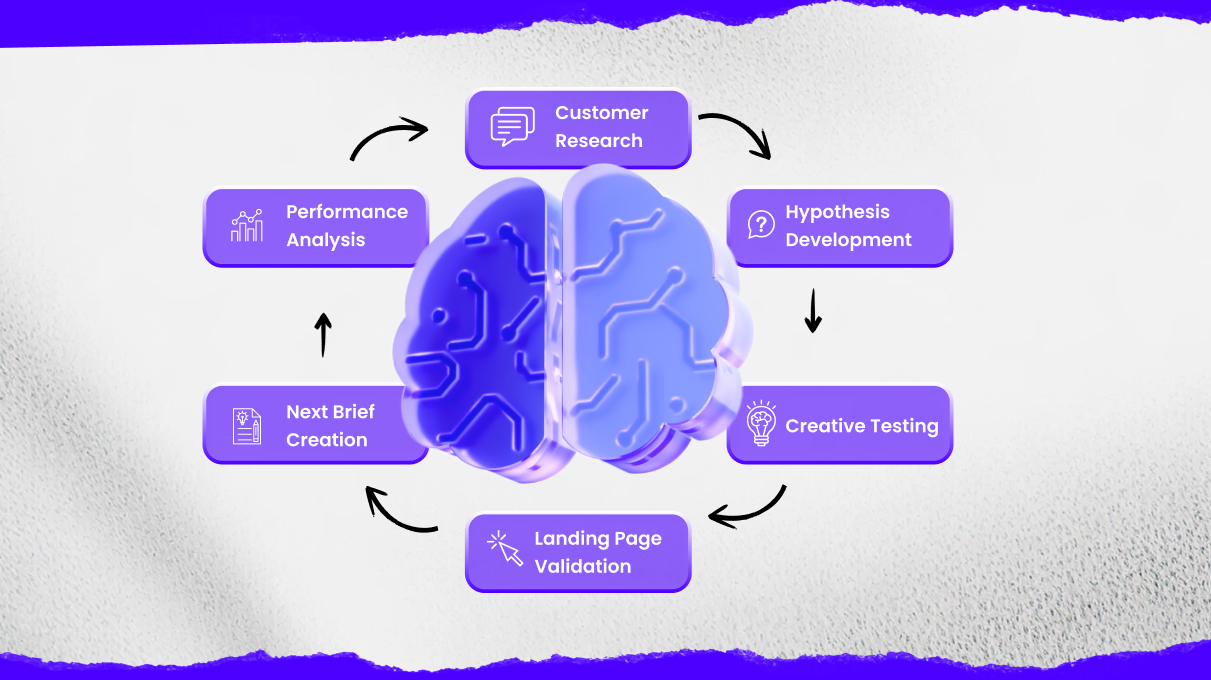
The 1 At Bat Creative Learning Loop
At 1 At Bat Media, we’ve found that the strongest creative marketing systems follow a repeatable process. Rather than producing assets for the sake of testing, high-performing brands use each campaign to learn something new about their customers.
The Creative Learning Loop:
- Customer Research – Gather insights from reviews, support tickets, surveys, comments, and purchase behavior.
- Hypothesis Development – Identify potential barriers preventing customers from converting.
- Creative Testing – Build creative around specific objections, motivations, or awareness levels.
- Landing Page Validation – Ensure the website reinforces the message introduced in the ad.
- Performance Analysis – Review not just winners and losers, but what the results reveal about customer behavior.
- Next Brief Creation – Use learnings to shape the next round of creative testing.
Before getting into the 10 lessons, it is worth saying the main point clearly.
Effective creative does not result from producing more ads for its own sake. It comes from testing higher-quality inputs.
This involves leveraging customer reviews, support tickets, objections, product questions, previous ad insights, site behavior, and offer performance to develop more purposeful marketing campaigns.
A robust system enables teams to identify customer priorities, pinpoint buying friction, and determine which message should receive additional investment.
While this may seem less exciting than a major campaign concept, it is often more effective.
1. More Creative Does Not Always Mean More Learning
A lot of teams think creative testing means launching more assets.
That can help, but volume alone is not a strategy.
If every ad says the same thing in a slightly different layout, the account is not learning much. The platform may get more files to work with, but the team still does not know which message moved the customer. Was it the problem? The proof? The offer? The format? The product education? The emotional angle?
This is where marketing campaigns often appear productive yet remain shallow.
A stronger process starts with a clear hypothesis.
→ “We think customers hesitate because they do not understand the difference.” “
→ We think proof matters more than price.”
→ “We think this product needs to be shown in context before the claim feels believable.”
That is the difference between activity and learning.
2. Creative Sameness Gets Mistaken for Creative Fatigue
Creative fatigue is real. But it is not always the real problem.
Often, the audience is not fatigued by the brand itself, but by repeated messaging. The ad may appear new, yet the underlying idea remains unchanged: the same benefit, product angle, visual style, discount, and promise, simply presented in a different format. That kind of repetition can make performance feel stuck.
Effective creative marketing strategies offer variety by testing different emotional appeals and levels of customer awareness. Some customers need proof, others seek comparisons, education, or recognition.
The problem is often simple: brands are running out of distinct ideas.
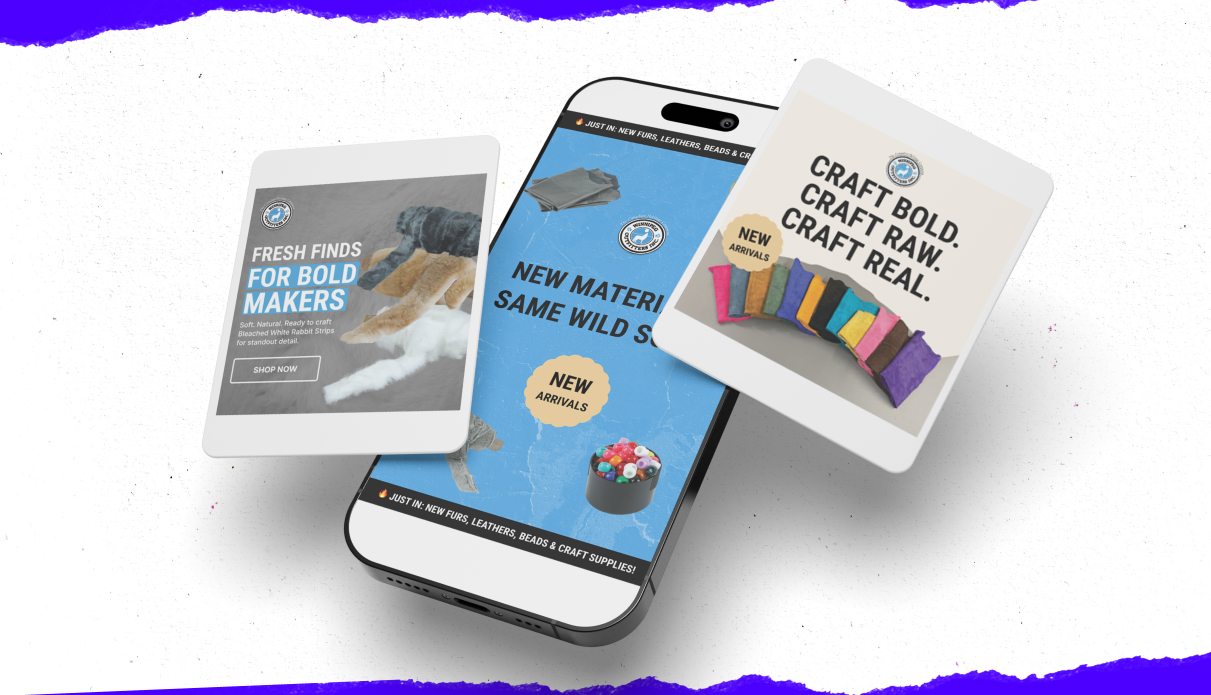
3. Hooks Should Test Customer States
A hook should go beyond attracting attention and provide insight into the customer.
- Problem-aware hooks can reveal whether the audience clearly feels the pain.
- Objection-led hooks can show whether hesitation is holding people back.
- Proof-led hooks can test whether trust is the missing layer. Comparison hooks can help when the category feels crowded.
- Identity-led hooks can work when the target audience wants to feel like the product was built for people like them.
This is why hook testing is essential in digital marketing. The opening line is a signal. A strong hook answers: What does this customer care about right now?
This insight should inform the next brief, landing page, email strategy, and, in some cases, the offer itself.
Example Hook Angles Worth Testing
A stronger hook system might include:
- Problem-aware: “Still replacing this every few months?”
- Objection-led: “Worth the price? Here’s why customers say yes.”
- Comparison-led: “The difference is not the ingredient list. It is the dose.”
- Proof-led: “Why 4,000+ customers switched.”
- Identity-led: “For people who actually use this every day.”
The point is not to make every hook clever. The point is to make each hook useful.
4. Emotional Angles Matter Because Logic Usually Arrives Second
Customers like to think they buy rationally. Sometimes they do. Often, the emotional decision starts first, then the rational proof catches up.
- “I do not want to waste money.”
- “I want to feel confident this will work.”
- “I hate buying the wrong thing.”
- “I want the easier option.”
- “I want this brand to get me.”
A lot of creative underperforms because it explains the product or service without addressing the feeling behind the purchase. This becomes especially important for premium products. If customers do not understand the difference, they default to price.
Discounts cannot carry the entire sales argument. Premium creative needs better education, stronger proof, clearer comparisons, and more reassurance. Customers need to recognize the value before the price makes sense.
5. Customer Objections Are Creative Inputs
Some of the best creative marketing ideas are already sitting inside the business.
Sources such as support tickets, reviews, email replies, sales objections, comments, abandoned cart reasons, competitor comparisons, product page questions, and even seemingly unhelpful ad comments can all provide valuable insights.
Customers consistently communicate what they do not understand, what they do not trust, and what information they need before making a purchase.
That is creative fuel.
A customer asking, “Is this worth the price?” is not an obstacle but a creative brief. A review stating, “I was skeptical, but…” is not filler; it provides a proof angle. Repeated support questions may indicate the need for a new section on the landing page.
Stronger inputs typically lead to more effective creative work. The goal is not always to produce something more elaborate, but rather something better.
6. Format Should Follow Friction
Ad format should match the job of the message.
- UGC-style videos work well when the product needs context, relatability, or demonstration.
- Review-led ads help when customers need proof from people like them.
- Founder-led creative can help when trust, mission, or differentiation matters. Comparison ads work when the category is confusing.
- Educational ads help when the product is premium, technical, or misunderstood.
The most effective format is the one that makes the message more credible.
This is important in social media marketing because audiences engage with messages differently. Some concepts require video, others a static image, a recognizable face, a side-by-side comparison, or a quick product demonstration to address uncertainty.
Selecting the right format reduces friction and accelerates engagement.
7. Offer Strategy Is Creative Strategy
Offers are not only pricing mechanics. A free shipping threshold can reduce hesitation at checkout. A gift-with-purchase can increase basket size. A bundle can simplify decision-making. A limited-time offer can create urgency. A discount can move volume, but it can also train customers to wait.
The offer changes how the creative feels.
- A stronger offer sometimes means:
- Removing a hesitation
- Making the customer feel like the purchase has more value
- Protecting margin while still giving people a reason to act
This is where the creative, media, and business teams need to be looking at the same reality. A campaign can look strong on top-line revenue and still hurt the business if the offer weakens margin or attracts low-value customers.
8. The Ad and the Website Need to Sell the Same Story
Creative content captures customer interest. The buying journey should make it easy for customers to act on that interest.
Many campaigns lose performance at this stage. Ads may promise clarity, but landing pages often create confusion. Creative assets highlight premium value, yet product pages appear generic. Ads address objections, but the site fails to reinforce them. As a result, customers must reconstruct the logic themselves.
This places an undue burden on the customer.
An effective creative system connects the ad, landing page, product page, reviews, offer, and follow-up experience. The narrative should progress seamlessly, with each step reducing uncertainty.
This is why conversion rate should not be viewed solely as a site metric. Ineffective buying journeys increase the burden on paid media. Fewer add-to-carts generate weaker signals, which hinder platform optimization. As a result, ad accounts are often blamed, as their performance issues are most visible.
In client audits, this pattern is common. While the ad account appears to be the issue, the real friction occurs after the click. Product pages lack clarity, supporting evidence is limited, and offers are difficult to understand. The page often fails to continue the argument established by the creative.
9. The Best Creative Usually Comes From Customer Research
Many brands prioritize brainstorming over listening to their customers.
At the same time, customers consistently communicate what matters to them.
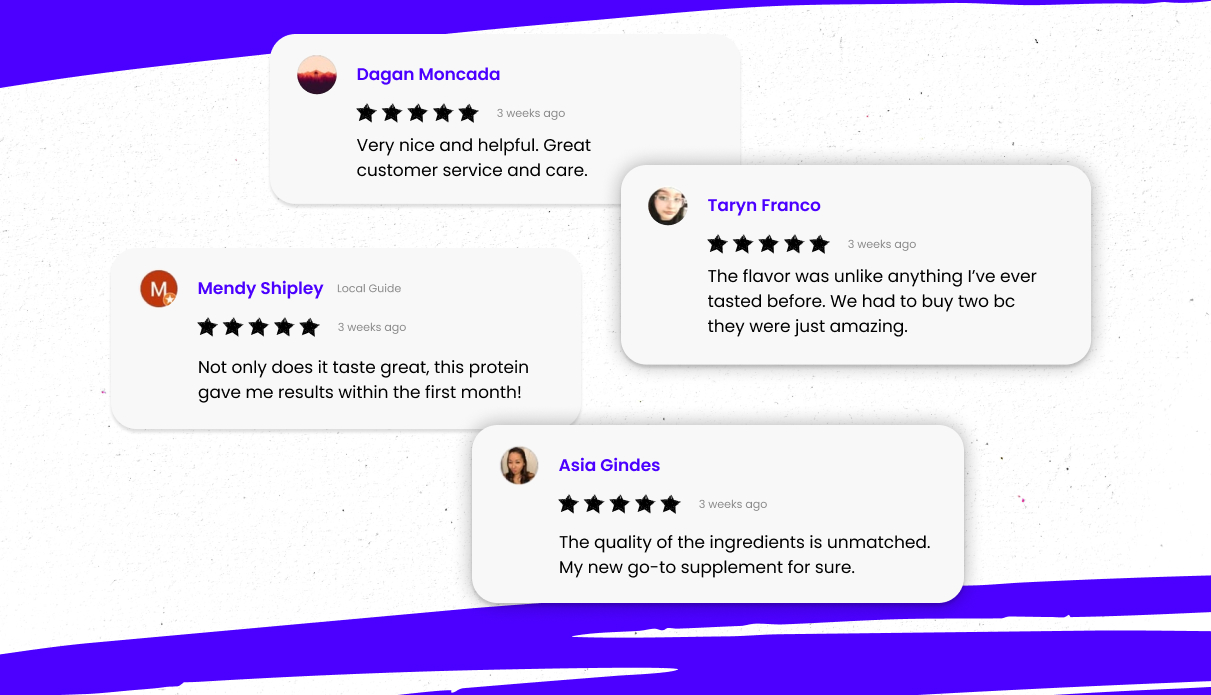
Reviews highlight customer motivations. Support tickets identify sources of confusion. Comments indicate skepticism. Product questions show hesitation. Survey responses capture the language customers use to describe their challenges.
This information is often more valuable than additional internal brainstorming sessions.
Customer research ensures creative work aligns with actual buying behavior. It identifies recurring objections, highlights valued benefits, and reveals which claims require further substantiation.
A recurring complaint can inform an objection-focused advertisement. A detailed review can serve as proof. A common question can shape a landing page section, email message, or user-generated content script.
The strongest creative rarely comes from guessing what the market wants to hear. The true evidence is in how customers communicate with your brand.
10. Winners Should Become Briefs, Not Trophies
A winning ad is useful, but what it teaches the team is more valuable.
- If a review-led ad wins, maybe the audience needs proof.
- If a comparison ad wins, maybe the category is confusing.
- If a founder story wins, maybe trust is the missing layer.
- If a demo wins, maybe the product needs to be seen in context before the claim lands.
The test is not finished when a winner appears. That winner should become the brief for the next test.
This is how successful creative gets stronger over time: Through steady refinement, better questions, cleaner creative range, sharper insights, and more honest readouts.
For brands trying to build this kind of connected growth system, the work often sits across paid media, email + SMS, performance creative, and clearer reporting. That is where 1 At Bat Media’s eCommerce growth services are built to help.
FAQ
What is creative marketing?
It is the use of messaging, visuals, offers, storytelling, and customer insight to influence buying behavior. In eCommerce, it often includes ads, landing pages, email flows, UGC, product education, and campaign testing. The goal is to make the product easier to understand, trust, and buy.
Why is creative marketing important for eCommerce brands?
It matters because platforms are automating more targeting while customer attention is harder to earn. Strong creative helps attract the right audience, explain value quickly, reduce hesitation, and improve conversion. It also gives brands better learning about what customers care about before and after purchase.
What makes creative marketing campaigns successful?
Successful campaigns are built around clear customer insight, strong messaging, and a specific learning goal. They test distinct hooks, objections, proof points, and formats instead of repeating the same idea. They also connect the ad to the landing page, offer, and follow-up experience.
What are good creative strategies for eCommerce?
Good creative ideas often come from customer reviews, support questions, competitor comparisons, UGC, founder stories, product demos, testimonials, and objection-led messaging. The strongest ideas usually come from real customer friction rather than internal brainstorming alone.
How can brands improve their creative strategy?
Brands can improve their strategy by testing clear hypotheses, studying customer objections, building more creative variety, matching ad formats to customer friction, and using winners to inform the next brief. Better creative usually comes from stronger inputs, better structure, and consistent refinement over time.
Final Thoughts
Creative has become one of the bigger levers in eCommerce because it touches more than the first click.
It shapes who enters the funnel. It affects what they believe. It influences how well the website converts. It supports retention. It gives ad platforms better signals. When the creative system is weak, everything else tends to work harder.
The brands that improve fastest are building a better learning system.
If your team is producing more creative work but learning less from each test, the issue may be your testing system.
At 1 At Bat Media, we help eCommerce brands connect paid media, performance creative, retention, and reporting into a unified growth engine, so every campaign generates clearer insights into what drives growth.
If you’re looking for a more structured approach to creative testing and eCommerce growth, explore our services or book a strategy call with our team.