

Meta recently rolled out a major update to its attribution model, causing a lot of chatter across the digital marketing world. Some advertisers are scrambling, worried that reported conversions and return on ad spend may suddenly look worse. At 1 At Bat Media, we’re not concerned, and here’s why you shouldn’t be either.
Unlike others who chase every platform metric, we’ve always focused on outbound clicks: the traffic that actually reaches your website or conversion point. Because of this, our performance marketing data remains clean, reliable, and actionable, even amid changes such as the Meta Ads Attribution Update 2026.
Let’s break down what the update means, why most advertisers are seeing confusing results, and how 1 At Bat Media’s approach can put your business ahead of the curve.
Key Takeaways
- Meta Ads Attribution Update 2026 is more about clarity in measurement than a change in actual business performance.
- Meta Ads Manager and Meta reports may show lower numbers for some advertisers because the platform now separates lower-intent engagement from traffic that actually reaches a destination.
- Brands should pay closer attention to click-through attribution, reported conversions, and how Meta attributes conversions inside its own system.
- Platform reports are still useful, but they work best when paired with third-party tools like Google Analytics and Triple Whale.
- A better approach is to count link clicks, validate what the platform only counts as engagement versus traffic, and anchor decisions to revenue, MER, and real business outcomes.

What Did the Meta Ads Attribution Update 2026 Change?
Meta’s update is all about accuracy in conversion tracking. In the past, Meta included a wide range of actions in its clicks metric: likes, shares, comments, and other non-link interactions. While these metrics can indicate engagement, they don’t always correlate with real conversions.
The new Meta Ads Attribution Update 2026 now focuses more tightly on outbound link clicks and how the platform reads intent.
This means:
- Only clicks that actually take users to a destination. Your website, landing page, or app counts toward click-through conversions.
- Interactions like reactions, shares, comments, social interactions, and engaged view signals are better understood in a separate engagement bucket.
- ROAS and conversion reporting will likely appear lower for some advertisers, but this is a shift in reporting, not a change in actual performance.
Essentially, Meta is aligning its measurement closer to what tools like Google Analytics have been measuring for years. For marketers who rely heavily on broad click metrics, this can look alarming. But for agencies like 1 At Bat Media, which track real traffic and conversions, the update is more of a clarification than a disruption.
How Advertisers Are Affected by Meta Ads Attribution
For many agencies and advertisers, this update will create what appears to be a sudden drop in click-through conversions. Why?
Before the update, metrics often included engagement clicks. Interactions that may not have generated traffic to a website. For agencies relying on those inflated numbers, reports now show fewer conversions and lower ROAS, creating confusion.
Consider this: an agency that measured success solely by clicks might have reported 500 conversions per campaign. After the update, only 350 of those are counted as true outbound clicks, because the other 150 were likes, shares, comments, or video views that never drove actual traffic.
This misalignment can lead to misinformed decisions: underestimating campaign performance, changing creative unnecessarily, or reallocating budgets away from campaigns that are actually performing well. When teams do not separate engagement from real traffic, they can end up reacting to reporting noise instead of business reality.
What This Means for Attribution Going Forward
This update also gives brands a better reason to tighten how they read attribution. It is not enough to look at one dashboard and assume it tells the full story.
Brands should review how Meta Ads Manager reports performance, how Meta’s reporting differs from other systems, and how third-party attribution tools fill gaps. That matters because consumer behavior rarely follows one neat path. Someone may see an ad, come back later through search, return from email, and convert after multiple touchpoints.
That is why it helps to understand how Meta attributes conversions, how another system may count conversions, and what each platform counts only in its own reporting view. A strong team learns how to engage through attribution with more clarity, not less.
Meta Ad Attribution Takeaways for Advertisers
- Focus on Outbound Clicks: Track real traffic to your site, landing pages, or app.
- Don’t Rely on ROAS Alone: Treat it as a directional metric.
- Use MER as Your North Star: Understand true business performance with ad spend versus revenue.
- Understand Reporting vs. Reality: Avoid reactive decisions based on platform reporting changes.
- Cross-Check With Business Data: Validate results with CRM, analytics, and backend data.
- Think in Systems, Not Platforms: Optimize your strategy across channels for sustainable growth.
- Review Link-Level Intent: Count link clicks and separate them from lighter engagement.
- Compare Sources Carefully: Use platform reports, Meta reports, and third-party tools together for a fuller picture.
1 At Bat Media’s Approach Puts You Ahead of the Curve
At our eCommerce growth agency, we’ve taken a different approach from day one. We focus on outbound clicks (real traffic that signals intent) rather than softer engagement metrics.
It’s important to note that while we optimize toward outbound clicks, platforms like Meta still control how conversions are measured within their attribution windows. That means updates to attribution, like this recent change, may impact metrics like ROAS.
So why shouldn’t you be concerned? Because if you work like us, you can optimize for real business performance beyond platform dashboards.
Focus on MER, Not ROAS
Many agencies rely heavily on platform-reported ROAS, so attribution changes can create confusion. At 1 At Bat Media, platform metrics are secondary signals. Useful but not decision drivers. Reporting shifts don’t change how we evaluate, scale, or grow campaigns.
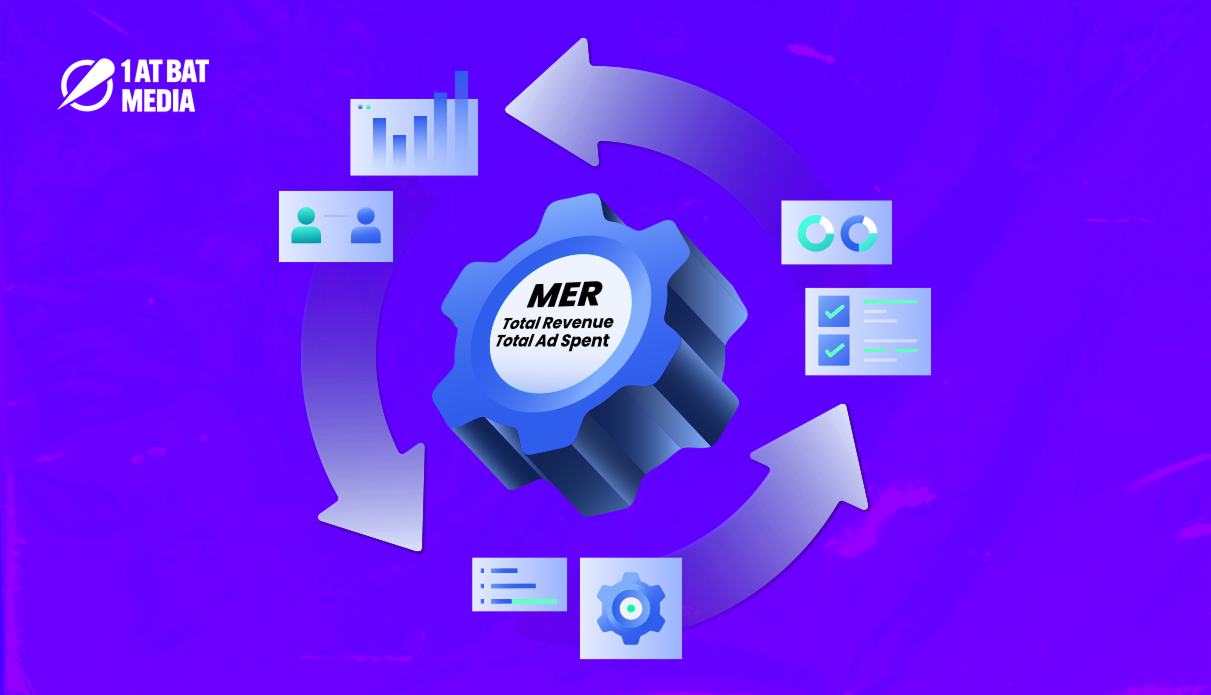
Our primary KPI is Marketing Efficiency Ratio, or MER, which is ad spend as a percentage of total revenue. MER gives a true, business-level view of performance across all channels.
Even if ROAS appears to drop due to platform reporting changes, MER remains stable because actual revenue hasn’t changed.
This approach ensures:
- Clear, reliable data tied to real business outcomes
- Smarter, more confident decisions without overreacting to reporting fluctuations
- Sustainable growth across platforms and channels
Big Picture Thinking
This update highlights a common problem in digital marketing: over-reliance on platform-specific metrics. Growth comes from real traffic, leads, and revenue beyond dashboard numbers.
Our philosophy stays the same:
- Measure what truly matters: outbound clicks, leads, and revenue
- Use MER as the north star KPI
- Treat platform metrics like ROAS, CTR, and CPA as directional signals, not sources of truth
- Use cross-channel insights to inform strategy
By thinking beyond individual platforms, we ensure campaigns contribute to real, long-term business growth.
FAQ on Meta Ads Attribution Update 2026
What is Meta Ads Attribution Update 2026?
Meta Ads Attribution Update 2026 is a change to how Meta measures click and conversion activity inside its advertising system. The update affects the way Meta Ads Manager shows results, how the platform attributes conversions, and how reported conversions may appear in campaign reporting.
Does Meta Ads Manager use link clicks only?
Not across every metric, but the update does place more weight on outbound actions that lead to a destination. Many advertisers are now paying more attention to link clicks only when reviewing traffic quality, since that gives a cleaner view of which users actually reached the site.
What is the difference between engaged view and click-through attribution?
Engaged view generally reflects attention or interaction without the same level of direct intent as a site visit. Click through attribution focuses on actions tied to someone clicking through to a destination. Both can be useful, but they tell you different things about performance.
Why do Meta reports differ from tools like Google Analytics or Triple Whale?
Meta reports reflect Meta’s internal system and how it attributes conversions within the platform. Third-party tools like Google Analytics and Triple Whale measure performance differently. That is why results may not match exactly. The goal is not to force a perfect match, but to use each system for the insight it is best at providing.
What is third-party attribution, and why does it matter?
Third-party attribution is a measurement that occurs outside the ad platform. It matters because it helps brands compare platform-side reporting with broader business data. That can be especially useful when teams want a more complete view of traffic, conversion paths, and revenue contribution.
Why do reported conversions sometimes drop after an attribution update?
When a platform tightens its attribution model, it may separate lower-intent actions from higher-intent traffic or assign credit more selectively. This can lower reported conversions inside the platform, even when real business performance has not changed.
How should brands use platform reports after this update?
Brands should still use platform reports, but not in isolation. Review them alongside backend revenue data, CRM information, and tools like Google Analytics to get a clearer read on what is actually happening.
What should advertisers do now?
Advertisers should review how Meta counts traffic, monitor how the platform counts conversions, and validate results across multiple dashboards. The strongest move now is to improve clarity, not overreact. That means better creative, better site experience, stronger offers, and a clearer understanding of attribution.
Final Thoughts on the Meta Ads Attribution Update 2026
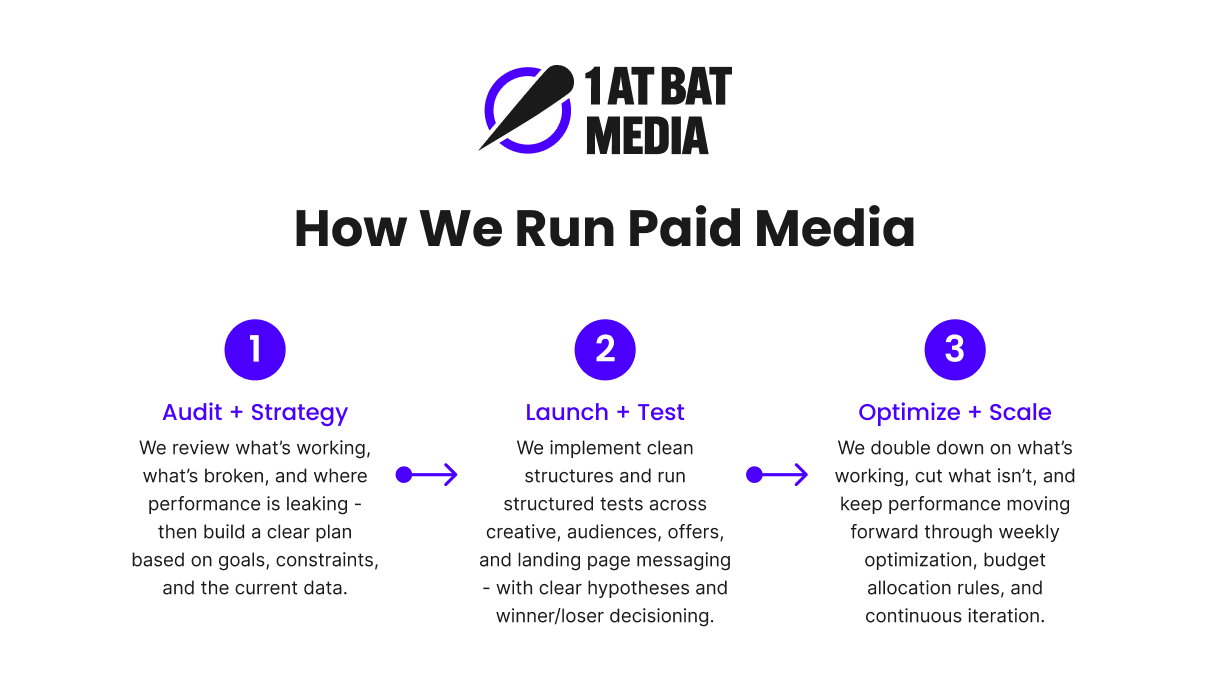
Meta’s attribution update is a wake-up call for the industry, but at 1 At Bat Media, it doesn’t change how we operate. By focusing on outbound clicks, anchoring performance to MER, and prioritizing business-level outcomes over platform metrics, our approach remains consistent.
In a world of constant platform updates, algorithm changes, and reporting shifts, companies that focus on real outcomes, not inflated numbers, are the ones that win. That’s why growth agencies like ours continue to deliver measurable, sustainable growth.