

A lot of brands respond to rising customer acquisition cost the same way. More budget. More campaigns. More creative. More channels.
Sometimes that is the right call. Often, it is only part of the picture.
From 1 At Bat Media’s point of view, the bigger issue is usually that growth has become too dependent on existing demand.
When you separate new-customer revenue from returning-customer revenue, the story changes. New customer growth is softer. Warm audiences are carrying more of the load. What looked like an acquisition may have been demand capture with a better paint job.
That is why this conversation matters. A high customer acquisition cost increase does not always tell you to squeeze media harder. Sometimes it is pointing to a weaker lifecycle system, messy attribution, or a brand that has not built enough value after the first purchase. As channels fragment and attribution becomes less clear, brands need a broader view of growth.
They need a clearer read on blended CAC, channel CAC, repeat purchase behavior, and whether acquisition is expanding the customer base or simply reactivating people who were already close to buying.
Key Takeaways
- Rising customer acquisition cost does not mean acquisition stopped mattering. It means the acquisition cannot carry the business alone.
- Blended reporting can make growth look healthier than it really is when returning customers, email, branded search, and retargeting are doing most of the work.
- A weak retention system makes acquisition more expensive because paid media has to keep replacing demand that the lifecycle system failed to convert or keep.
- The goal is more revenue from a customer base that keeps expanding, not revenue held together by warm demand alone.
- Stronger customer retention, better email flows, and clearer customer reporting are becoming central to eCommerce profitability as CAC keeps climbing.
Why Customer Acquisition Costs Are Increasing
Customer acquisition costs are rising for several interconnected reasons.
1. Competition.
More brands are advertising online, and many are trying to reach the same audiences across the same platforms. This increases auction pressure, which can drive up paid media costs.
2. Signal Loss
Privacy changes, cookie restrictions, and reduced tracking visibility have made it harder for platforms and marketers to see the full customer journey. Attribution is less precise than it once was. As a result, brands may struggle to identify which touchpoints are truly driving new customer growth.
3. Channel Fragmentation
Customers no longer move through a neat, linear funnel. They discover products across TikTok, Instagram, Google, YouTube, influencers, review platforms, newsletters, podcasts, search results, and marketplaces. They move between devices. They compare more. They wait longer.
That creates a more nebulous path to purchase.
4. Consumer Skepticism
Shoppers are exposed to more ads than ever, making generic creative easier to ignore. Simple product images and broad discount messages often aren’t enough to generate demand.
Many brands are operating in a market where consumers are more careful with spending. When customers become more selective, brands need to work harder to prove value before purchase.
All of this makes the acquisition more expensive.
Not because customers have disappeared. Because earning their attention and trust now takes more work.
When Blended Growth Looks Healthy, But New Customer Growth Is Weaker
This is where teams get tripped up.
Revenue is up, MER looks acceptable, ROAS is holding, returning customers are active, and email is contributing. There is enough movement in the account that nobody feels immediate panic. Then the business tries to scale, and the weakness shows up.
Blended numbers are useful for a high-level view, though they can be dangerous when they mask whether the business is still attracting enough new customers. A brand can grow revenue even as its acquisition engine quietly weakens.
That matters even more when rising ad costs and fragmented attribution are pushing teams to ask harder questions. Is this campaign creating demand, or capturing demand that already existed? Is branded search doing the heavy lifting? Is email reviving customers that paid media is taking credit for?
Those are not small questions. They change how you read the whole account.
What Rising Customer Acquisition Cost Really Means
A lot of growth conversations still treat CAC like it belongs to the ad team alone. That framing is too narrow.
Rising CAC pressure margins in more places than the ad account. It touches discounting, shipping, product mix, conversion rate, and the quality of the post-click experience.
A paid click that does not lead anywhere useful is expensive. A paid click that generates a signup and falls into a weak welcome flow is expensive in a quieter way. The spend happened either way. The difference is whether the system did enough with the attention it already bought.
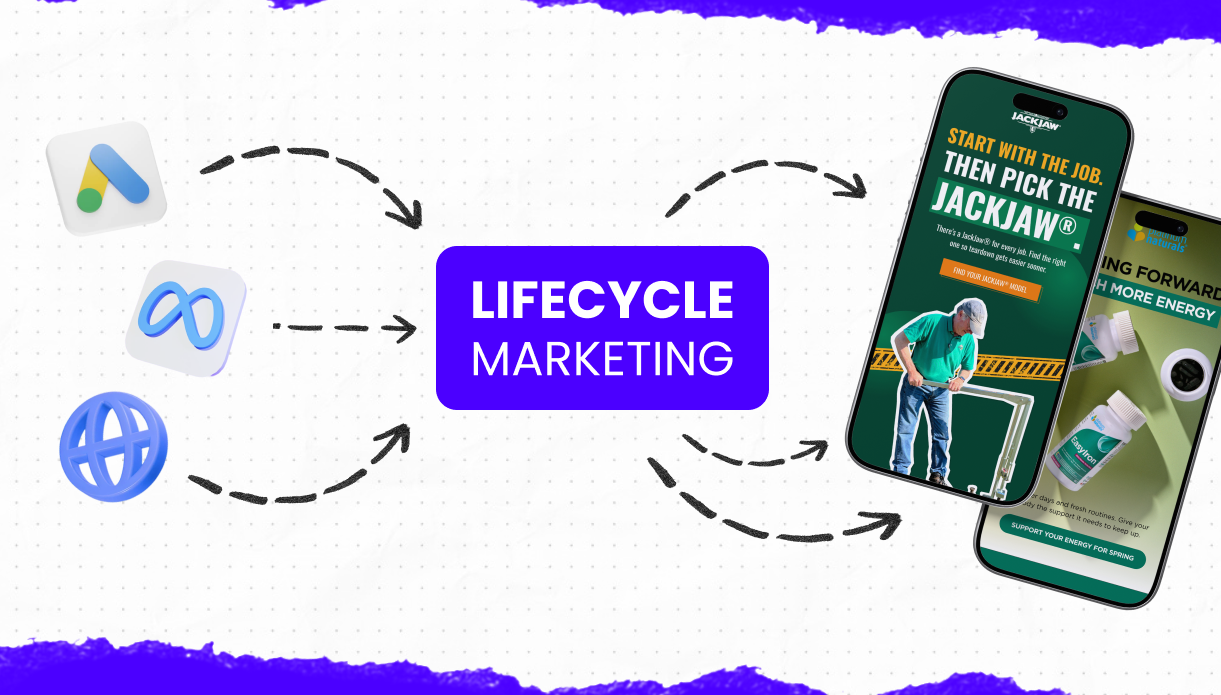
That is why weak lifecycle marketing makes paid media work harder than it should. If a visitor signs up, they are already more aware and more interested than most of the audience the brand is paying to reach. A welcome flow should help turn that attention into intent. If it does not, the brand keeps paying to restart the conversation from scratch.
Increasing CAC Changes The Way Growth Should Be Measured
As brands scale, warm demand gets harder to rely on. The pool of people who already know the brand has limits. A business can maintain revenue for a while by leaning on existing demand, especially at lower spend levels, but that efficiency becomes harder to sustain as spend rises and warm audiences grow thinner.
That is where increasing CAC starts to feel heavier. It is not only a media issue. It is a measurement issue and a systems issue, too.
A better lens includes:
- eCommerce customer acquisition cost
- New versus returning customer mix
- Repeat purchase rate
- LTV to CAC ratio
- How much of the growth is coming from branded demand, retargeting, and lifecycle revenue
Without that view, a brand can mistake recycled demand for scalable acquisition. That feels fine for a while. Then the scale gets more expensive, and the answer becomes harder to find.
Demand Creation and Demand Capture Need Different Expectations
One of the most useful ideas is that demand capture and demand creation are both valuable, but they serve different purposes. That sounds obvious. It still gets mixed up all the time.
This is where Meta ads CAC increasing and Google Ads CAC increasing can mislead teams in different ways:
- On Meta, warm audiences, engaged visitors, and existing brand awareness can keep performance looking cleaner than true top-funnel prospecting really is.
- On Google, branded search and campaigns leaning on people already close to buying can make acquisition look stronger than it is.
A brand still needs both jobs done well. It needs demand to be captured efficiently. It also needs demand created beyond the warm pool. The problem starts when both are measured as if they are proving the same thing.
Carla’s Cookie Box Shows What Stronger Retention Can Do
This is part of why Carla’s Cookie Box case study is useful here.
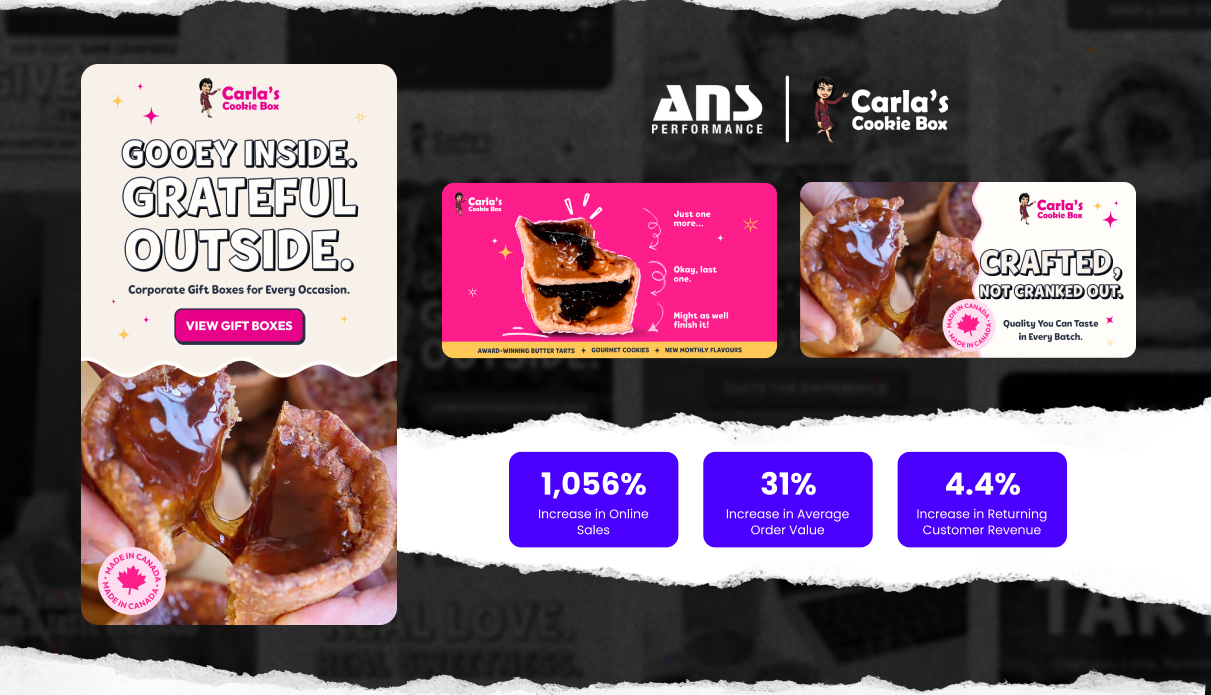
Carla’s Cookie Box approached 1 At Bat Media with strong product demand, a strong local brand reputation, and momentum built through events and in-person activations. The opportunity was to shift the business toward a more scalable and repeatable eCommerce model by building a more structured acquisition strategy and strengthening retention and repeat revenue.
What changed was not one flashy tactic. The work included tighter paid media across Meta and Google, stronger KPI visibility, cleaner reporting, a more intentional email calendar, improved automation, and better coordination between offers, campaigns, and product priorities.
The goal was a more connected growth system that could scale online revenue while improving customer value over time.
The outcome matters here. As eCommerce gained traction, the business became far less dependent on in-person events and more capable of driving repeatable online sales across Canada and the U.S. This led to a stronger repeat purchase momentum and increased customer value. As a result, Carla reached 1,056% increase in online sales.
That is what retention done right looks like. It does not replace acquisition. It gives an acquisition somewhere useful to go.
The Growth Model Has To Get More Connected
The underlying issue is simple: acquisition and retention are still treated like separate strategies in too many businesses.
But when CAC rises, that separation gets expensive. Paid media creates attention. Email and lifecycle should help turn that attention into value.
Creative should support the right products and offers. Reporting should separate what is coming from new demand from what is from existing customers being reactivated. If those pieces are disconnected, the brand ends up paying more to keep the machine moving.
This is also where our own work tends to sit. 1 At Bat Media’s service model is built around paid media, email + SMS retention, performance creative, and clearer reporting because profitable growth usually depends on those pieces working together, not in isolation.
FAQ on Rising Customer Acquisition Costs
What is rising customer acquisition cost?
Rising customer acquisition cost means the total cost to win a new customer is increasing over time. That can come from higher media costs, weaker conversion, more competition, lower traffic quality, or poorer downstream retention. It matters because acquisition can appear active while becoming less profitable, especially when margin and repeat purchase are not included in the measurement.
Why is increasing CAC a bigger problem for eCommerce brands?
For eCommerce brands, increasing CAC affects more than ad efficiency. It puts pressure on margin, payback period, and growth pace. If repeat purchase is weak or lifecycle marketing is underbuilt, the business has fewer ways to recover acquisition spend. That is why rising CAC often becomes an operating model issue, not only a channel issue.
What is the difference between blended CAC and channel CAC?
Blended CAC looks at acquisition cost across the whole business. Channel CAC isolates the cost by source, such as Meta, Google, affiliates, or another channel. Both are useful. Blended CAC helps with overall business health, while channel CAC helps identify where efficiency is improving or slipping and whether warm demand is making the account look stronger.
How does customer retention help offset rising ad costs?
Customer retention helps offset rising ad costs by increasing the value of traffic the brand already paid to acquire. Strong welcome flows, campaigns, segmentation, and repeat purchase systems can improve customer value, lift the LTV to CAC ratio, and reduce how often paid media has to restart demand from zero.
Why do Meta ads CAC and Google Ads CAC increases require a bigger strategic shift?
With Meta Ads CAC increasing and Google Ads CAC increasing happening at the same time, it often signals that brands need a wider growth diagnosis. The answer may involve creative, customer mix, site conversion, lifecycle flows, reliance on branded search, or product priorities. A paid media problem is not always a paid media problem.
Final Thoughts on Rising Customer Acquisition Costs
High CAC is forcing brands to get more honest about where growth is really coming from.
It pushes teams to separate new customer growth from returning customer revenue. It pushes them to care more about repeat purchase rate, cleaner reporting, and whether lifecycle marketing is doing its job.
That does not mean acquisition matters less. It means acquisition needs more support than it used to. As paid media costs rise and attribution gets messier, the brands that hold up best will be the ones that treat retention as a growth strategy with real ownership behind it.
Want to scale your brand the smart way? Book a discovery call with us!